Accessibility Tools


Introduction

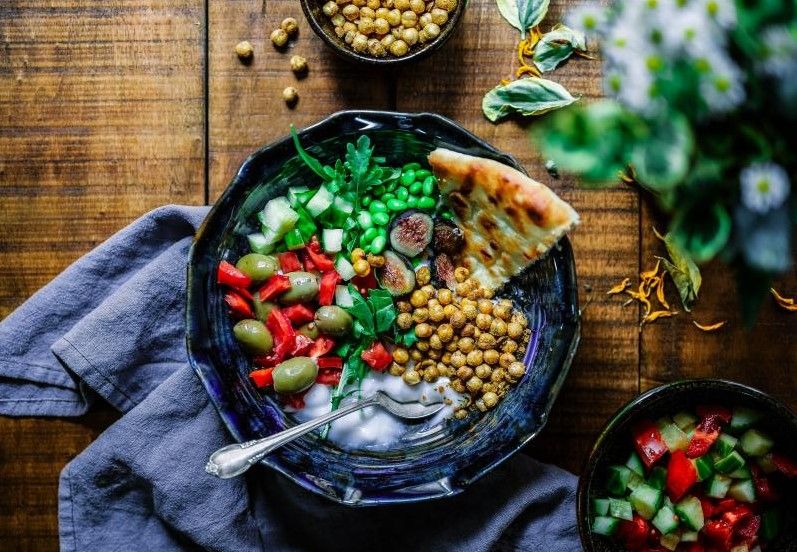
Plant based bowl (By @edgarraw on unsplash.com)

Nowadays it is not enough to eat well and healthy, it’s necessary to eat sustainably.

Obesity and the impact of the food we eat on the environment has been growing considerably.

Researches show us that 39% of the world population suffers of Obesity. On the other hand, food is responsible for around 30% of the greenhouse gas emissions. Other researches show us that 70% of the freshwater taken from rivers and lakes is used in agriculture. Furthermore, agriculture is the biggest cause of forest loss and our current system is responsible for 60% of biodiversity loss worldwide. These numbers are predicted to increase if we don’t take actions. 

To help tackle these issues, the following activity builds on an informative lesson for the learners, a personal assessment for each of them and a debriefing with the teacher. After that, learners will take an active role in researching and implementing ways to improve the school relationship with food through, amongst other initiatives, the creation of “livewell plates” with diets for all ages. These plates should be projected to help us eat sustainably while meeting with our nutritional needs. Luckily, according with some researches these two things go hand in hand.

Action Areas

  • Healthy lifestyles

Learning Objectives

Cognitive learning objectives:

  • The learner understands the socio-political-economic dimensions of health and wellbeing and knows about the effects of advertising and about strategies to promote health and well-being.

Socio-emotional learning objectives:

  • The learner is able to encourage others to decide and act in favour of promoting health and well-being for all;
  • The learner is able to create a holistic understanding of a life of health and well-being, and to clarify related values, beliefs and attitudes;
  • The learner is able to develop a personal commitment to promoting health and well-being for themselves, their family and others, including considering volunteer or professional work in health and social care

Behavioural learning objectives:

  • The learner is able to include health promoting behaviours in their daily routines;
  • The learner is able to publicly demand and support the development of policies promoting health and well-being


Competences

  • Normative competency:
  • Strategic competency;
  • Critical thinking competency;
  • Self-awareness competency;

Instructions

Step 1) Do you eat healthy and sustainably? (30 minutes)

The teacher could introduce the Sustainable Development Goal number 3 to the students and use video 1 and 3 to support it. After watching the video, the teacher could read the introduction that was written in this activity, posing particular attention in explaining the following points and specify the subject that is going to talk about in the lesson (eat healthy and sustainably):

  1. Eat more vegetables, adding choice and flavour and also create plates with plant-based;
  2. Eat a variety of food, expanding our taste horizons instead of relying on the same dishes and ingredients;
  3. Waste less food because when we throw away food, we are throwing away natural resources and money. The average household wastes around 30% of the food it buys – that’s like taking 100€ out of the bank and putting 30€ straight into the bin;
  4. Moderate your meat (red and white), enjoying other sources of protein such as peas, beans and nuts;
  5. Buy food that meets a credible certified standard, searching for logos on the packaging of the food we buy that means is sourced and produced sustainably;
  6. Eat fewer foods high in fat salt and sugar, these are treats and not straps.

Step 2) 21st century food routine (60 minutes)

Each student must create their daily food routine and write the information that is requested below:

  • How many times a week do you eat vegetables?
  • How many times a week do you eat meat? And fish?
  •  Which suppliers do you use? Local or big suppliers?
  • Do you buy certified products?
  • How many ingredients do you use on each week (average)?
  • How many times do you go to the supermarket in a month?
  • How many times a week do you eat canned products?

For this study, it is advisable to put all the data in an Excel Sheet and design graphs with the most relevant information data previously analysed.

The teacher must show the results and make a reflection with the students. The reflection should understand that the daily routine of each person could have a big impact in economic, environmental and social terms. However, small changes in their and their family daily routine could be a precious global help (ex: eat more plants, eat a variety of food, waste less food, moderate your meat, buy food that meets a credible certified standard, eat fewer foods high in fat, salt and sugar). The teacher could use video 2 to help the discussion.

Step 3) Let’s prepare the actions (240 minutes)

The students are divided into 3 groups (number 1, 2 and 3). The objective of each group is:

  • Group number 1:
    • Search and create a list of local suppliers that sell certified, organic and sustainable products;
  • Group number 2:
    •  Search for a nutritionist who would like to work in partnership with the school;
    • According with the nutritionist feedback, list the products that are essential, healthy and sustainably in every daily food routine to build a balanced weekly diet;
  • Group number 3:
    • Research methods to minimize the food waste, for example learn about composting, sustainable disposal of food waste, and make a list of shops that sell products without packaging or brands that have adopted 100% recyclable or degradable packages. Also look for a local charity association that could be interested in gathering the food leftovers from the school.

When these activities are completed, the learners will share each result with the others. To conclude, the teacher can show video 3.

- CALL TO ACTION 1 

With the help of a nutritionist (if the nutritionist contacted in Part 2 accepted to collaborate, it will be him or her) ask the students to create an eating plan for the school and create a list of “livewell plates” which can be used one time a week at the canteen. Even more, is advisable to list these plates and send it to the director of school asking for approval and permission

- CALL TO ACTION 2

The students have to write a letter to the director of the school and write a request of some changes or improvements on the food points (canteen, bars, vending machines). Detail the suppliers who comply with the product requirements (certified, organic, green products) and ask him to analyse the actual suppliers and change some of them to these new (sustainable) ones. Even more, is advisable to order a “livewell plates” one time a week on the canteen (ex: day without meet, day with green products)

- CALL TO ACTION 3

Contact the local charity institution (searched during previous activity in part 3) and one time a week collect the leftovers on the food points of the school and bring them instead of putting it in the bin.


Requirements

  • Classroom;
  • Computer;
  • Microsoft office on each computer;
  • Projector;
  • Paper, pen;
  • Wifi and internet;
  • Phone


Notes for Educators

Estimated Total Duration: 5 hours 30 minutes + Call to action

Step 1: To introduce the activity is advisable to use the websites that are listed on WEBSITES URL.

Step 2: Organize a small workshop, teaching how to use excel.

Step 3: 

  • It is advisable that the groups don’t have more than 5 people and split them according to their skills;
  • If necessary, organize small visits to some suppliers to show green and certified products to the students;
  • If necessary, help students to get in touch with notruicinoists and social entities by explaining the project they are developing.
  • Conduct the reflection/discussion after they finish the group activities.

Call to Action: Plan the “live well plates” for the whole duration of the year.


Wnioski

Wybierając legalne kasyna w polsce 2025 dla Polaków online, gracze mogą być pewni, że ich prawa są chronione, a gry są prowadzone uczciwie. Legalne kasyna online zapewniają bezpieczeństwo danych osobowych i finansowych graczy dzięki odpowiednim licencjom. To gwarantuje, że każda gra jest monitorowana, a ewentualne problemy rozwiązywane są zgodnie z obowiązującymi przepisami. Gra w legalne kasyna online to nie tylko większa pewność wygranej, ale także wsparcie dla gospodarki, gdyż takie kasyna płacą podatki w Polsce, co przynosi korzyści całemu społeczeństwu.